Jonathan Simone / Selected projects

The work

Each project shows what I built, what was checked, and where it stops.

Every row gives the result and its main limit. Open a row for the design decision, the evidence and the links. I choose the questions, design the systems and check the results, using AI tools to help write and test the code. See the colophon.

Working remake

Baldies remake

A 1995 god game rebuilt without its source code. All 100 original levels load with 0 errors on the desktop build, and a generated-level edition runs on the front page.

Limit Playtested only by me. The rules are the new engine's own tuning, not checked against the original game. All limits
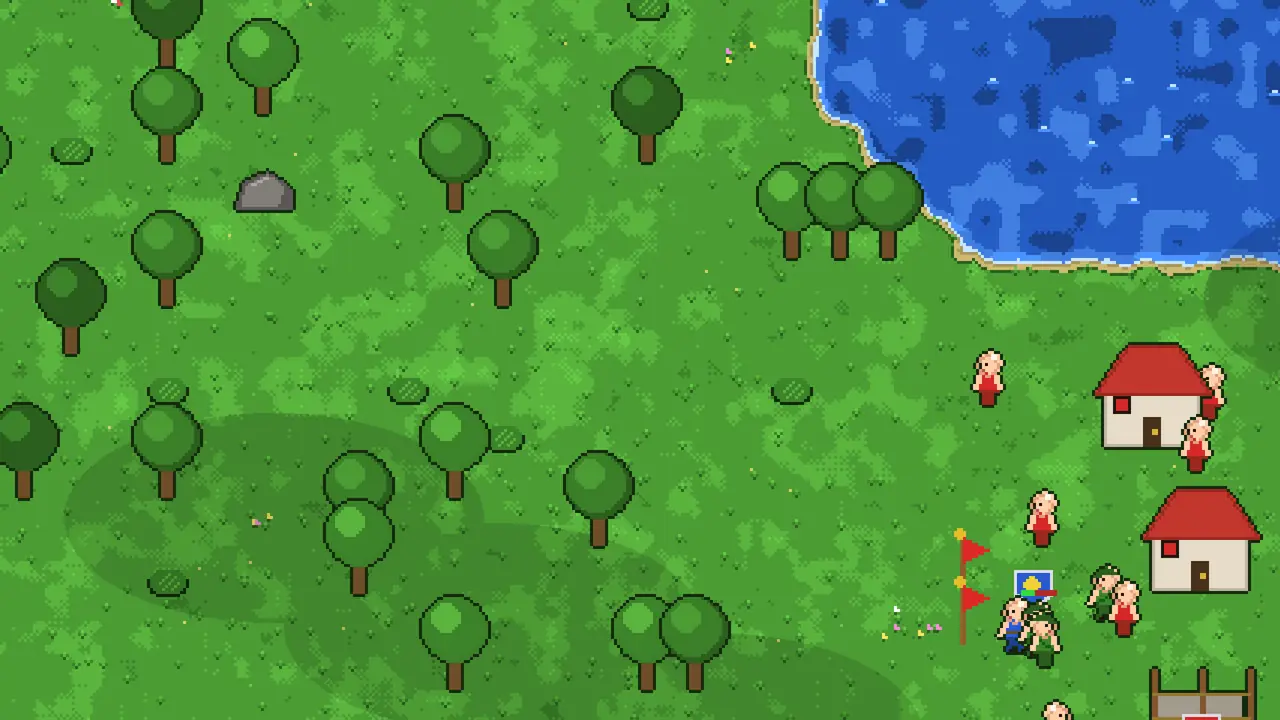
Grass world still: a green meadow with trees, a rock, a lake and two red-roofed houses, with small figures in red and green.
Design decision, evidence and linksHide the evidence

Problem and design decision: Classic games without source code cannot be maintained or studied directly; I paired a specification-based Python simulation with a separate binary-analysis prototype that decoded the original level files and data tables.

A 1995 god game by Creative Edge Software, rebuilt without its source code. All 100 original levels load and draw in the Windows desktop build from an owned copy. A version with generated levels and new art runs on the front page, and you can change its rules while it plays. On the desktop build, all 100 levels load with 0 errors and 9,000 random inputs caused 0 exceptions.

Grass world, the first of the remake's five worlds: grass, ice, circus, sand and hell. Generated level, project-made art.
Main research, in development

Main research: the Consumption Engine

Keeps project knowledge tied to its sources so that stale work can be refused. On ApprovalBench, a single-package target, source-blind rebuilds passed in 3 of 3 runs (October 18).

Limit Results come from my own runs, with 0 independent reproductions logged. The public fixture checks the published contract, not the private runtime. All limits

Design decision, evidence and linksHide the evidence

Problem and design decision: Agent summaries and instructions quietly go stale when upstream documents change, and passive prose guides alone did not beat an ordinary workflow across 37 real repository tasks (48.8%/49.0% vs 53.8%); the engine binds extracted claims, 5-project Document Atlas spans (883,486 files censused, 699 keepers, 8,013/8,013 span hashes), and AST-mapped code bricks to source revisions and executable pytest oracles.

In the October 18, 2026 study on ApprovalBench (61 AST units in a single package), source-blind rebuilds from verified code bricks passed in 3 of 3 runs, while mechanical self-maintenance flagged 15/15 behaviour-changing edits with 0/12 cosmetic false-stale alerts. One Baldies prototype also used the engine to carry disassembled values like the house-capacity table into code, and a public synthetic fixture runs with plain Python. Council, BigBoss and SEED remain separate supporting projects.

How the brief frames the work: keep the source, record the task use, and check it. Council, BigBoss and SEED stay separate.

Public atlas

Voynich manuscript (Beinecke MS 408)

An Evidence Atlas that pairs the manuscript's folio images with nine source-linked evidence stories, corrections and downloadable records.

Limit The manuscript remains undeciphered. The interpretation shown is labeled as a working one.

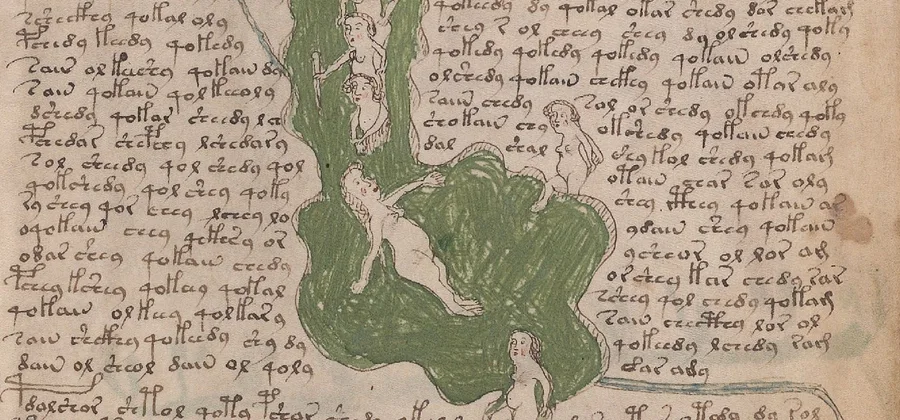
Detail crop of Yale Beinecke MS 408 Folio 75r showing dense Currier B paragraph lines written by Scribe 2 with bench-gallows and -edy/-aiin endings.
Design decision, evidence and linksHide the evidence

Problem and design decision: Published Voynich studies often fit a cipher or generator to a few global statistics or differ in how they filter lines and spaces; I built an interactive Evidence Atlas with the team (the AI agents I direct) that pairs Beinecke MS 408 folio images with nine source-linked evidence stories, corrections and downloadable records.

Explore plants, pools and star diagrams, then follow the selected evidence stories to their sources, scope limits and a clearly labeled working interpretation. The manuscript remains undeciphered; earlier research accounts remain available below.

Beinecke MS 408, Folio 75r (Currier B, Hand 2, public domain via Yale University Library): physical lines act as compositional units.

Released v0.1.1

FluidSoftware starter kit

A standard-library Python kit that gives coding agents explicit module contracts, scoped context and SHA-256 delivery receipts.

Limit One matched pair with untimed framing: it shows the workflow is feasible, not that it is faster. All limits

Design decision, evidence and linksHide the evidence

Problem and design decision: Coding agents lose structural coherence when they start in an empty folder or rely on one long chat transcript; the fluid CLI (1,264 lines across 6 Python 3.11+ standard-library files) separates module hierarchy (parent), semantic contracts (depends_on) and dispatch gates (build_after), materializes native MODULE.md contracts, renders three-tier bounded context packets, and tracks SHA-256 delivery receipts.

In a matched October 23, 2026 comparison building a four-document Research Navigator, both fresh builders (Foundation-assisted and ordinary control) satisfied 13/13 protocol rows on unchanged first-delivery bytes with 0 product repairs after adjudicating two defects in the frozen evaluation harness. Because frame authoring was untimed prior to dispatch on an n = 1 pair, it demonstrates workflow feasibility and oracle accountability rather than a net speed multiplier.

How FluidSoftware frames a build: explicit module contracts, three-tier context, and SHA-256 receipts.

Working instrument, browser preview

MusicLab

A browser instrument for people who believe they are not musical: a band is already playing across 78 style arrangements, you steer it and join in on eight scale keys with home notes marked, and Make my song turns the moment into an editable song. A 6-style interactive sketch runs on the case study page.

Limit Not yet observed with the beginners it is meant for. Only the Ska, Rocksteady and Reggae arc and the six-region field use continuous scored interpolation. All limits

Design decision, evidence and linksHide the evidence

Problem and design decision: People who move to music often stop when they meet the instrument or the software. MusicLab starts with a band that is already playing, so a press joins the music instead of starting from silence.

Inspired by Banjo-Kazooie's adaptive music, the band changes style around the notes a person contributes while those notes stay theirs. The full build spans 78 musical arrangements with a scored continuous Ska, Rocksteady and Reggae arc, eight-key scale play, a live read meter and picture answer receipts so you can see what the band hears, 24-bar unbroken history capture across rests and restarts, a leave warning before unkept Jam notes can be lost on reload, dealt Adjust idea cards, whole-song timeline scrubbing, live note dragging and MusicXML 4.0 sheet notation (804 JavaScript and 130 Python tests, 303 to 351 ms quiet first sound across 12 package runs, and a 78-of-78 style sweep at commit d0a8d7a). It runs locally in the browser with no account and does not generate audio with AI; I built it by directing AI coding agents.

Cutaway of the genre circle, multi-part band timeline (Beat, Bass, Chords, and Your notes), and eight scale keys.

Personal tool, v0.1.0

BigBoss

An approval gate for coding agents. Each decision is tied to one hashed action and saved in SQLite; release v0.1.0 passed 399 tests on Ubuntu and Windows.

Limit Keeping the agent isolated from the approval API is the operator's job, and the decision history is not tamper-evident.

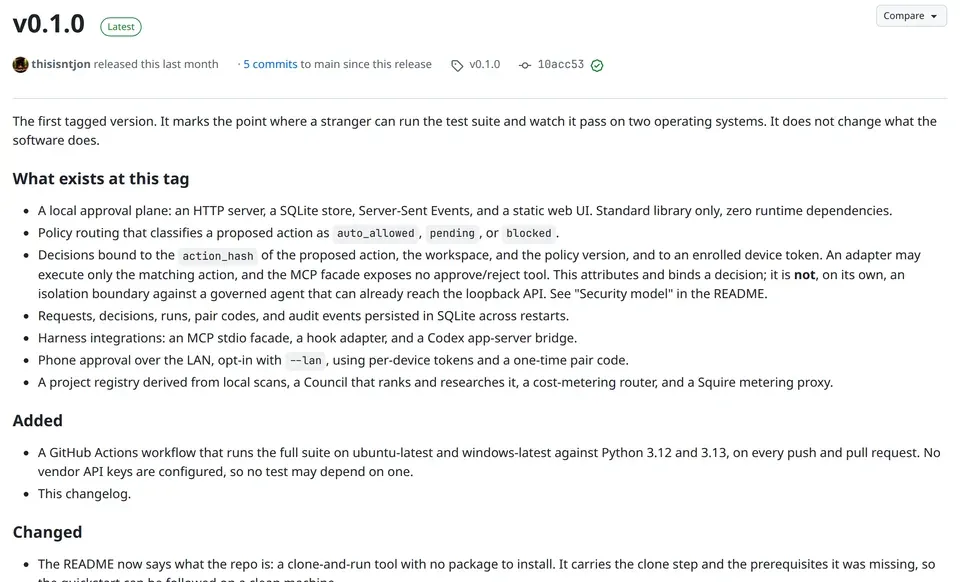
GitHub release page for bigboss-approval-plane v0.1.0, marked Latest, with notes listing what exists at this tag.
Design decision, evidence and linksHide the evidence

Problem and design decision: Coding agents can execute destructive shell or file actions before a person notices; BigBoss hashes the exact proposed action, workspace and policy version into a persisted SQLite approval gate.

An approval gate for coding agents. Each decision is tied to one hashed action and saved in SQLite. Release v0.1.0 passed 399 tests with no skips in four jobs: Ubuntu and Windows, Python 3.12 and 3.13.

Release v0.1.0 of bigboss-approval-plane on GitHub, with notes on what exists at that tag.

Working app

The Council

Gets answers from several model providers, has them critique each other, then checks the claims and combines the result.

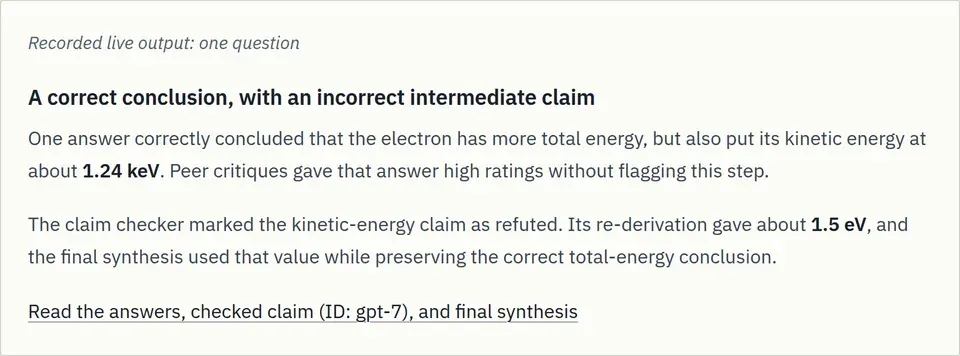
Limit One recorded run shows a claim check catching an error the critique missed. That is an example, not a measured quality gain.

Council recorded-run section: a correct conclusion with an incorrect kinetic-energy claim caught by claim checking.
Design decision, evidence and linksHide the evidence

Problem and design decision: Peer models often agree on a plausible-sounding numerical mistake; The Council separates open-ended critique from explicit claim extraction and re-derivation.

An app that gets answers from several model providers, has them critique each other, checks the claims, and combines the result. A recorded live run shows a claim check catching an error the critique missed.

Recorded live run on the Council case study: claim checking catches a step peer critique missed.

Measured, mixed result

Pokémon TCG

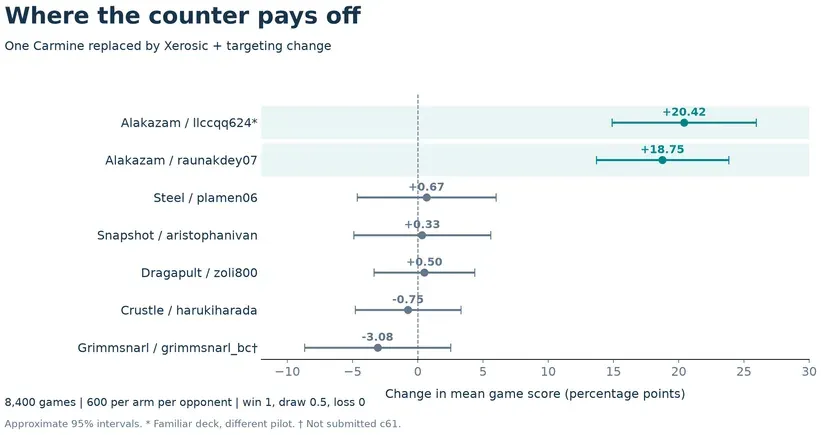
A matchup counter for the card game, tested over 8,400 games. It gained 20.42 and 18.75 percentage points against two Alakazam implementations.

Limit Against the other five tested opponents it averaged -0.47 points. A broader benefit is unresolved.

Bar chart of change in mean game score for seven matchups: two Alakazam decks gain 20.42 and 18.75, the rest -3.08 to +0.67.
Design decision, evidence and linksHide the evidence

Problem and design decision: Broad self-play learners struggled to retain gains across opponents; isolating a targeted matchup rule change and testing it across 8,400 games showed where it helped and where it stayed flat.

Learning parts and a matchup counter for the card game. The counter builds on makthanithin's Apache-2.0 community_1084 policy. Each opponent faced 600 games against the baseline and 600 against the counter. Against two tested Alakazam implementations, the counter gained 20.42 and 18.75 percentage points. Against the other five tested opponents it averaged -0.47.

8,400 games, 600 per arm per opponent; bars show approximate 95% intervals.

Methods public, game code private

Godot AI Methodology & The Argon One-Shot

Methods and checks for building Godot games with an AI coding assistant, plus a 3D city simulator built in Godot 4.7.

Limit The simulator's code is private and the browser version is a simplified sketch. No measured benefit is claimed for the methods.

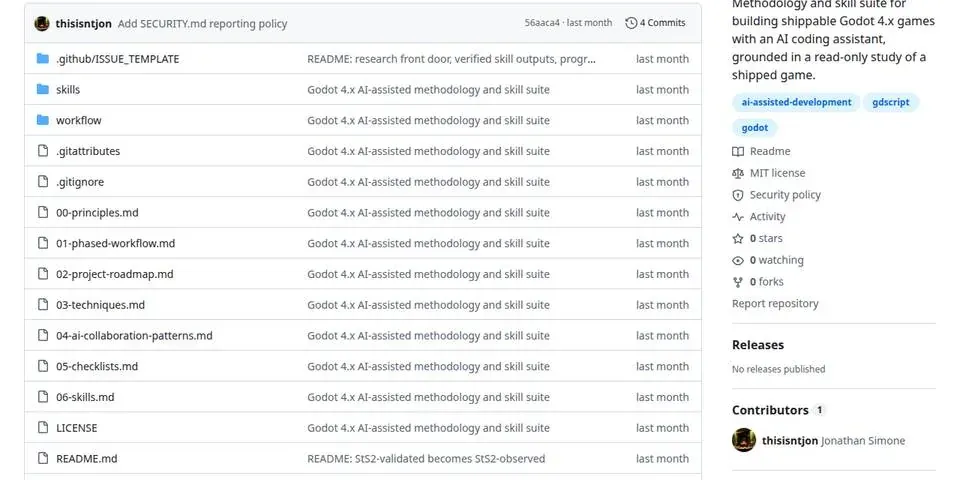
GitHub repository page for godot-ai-methodology: skills and workflow folders, principles and phased-workflow files.
Design decision, evidence and linksHide the evidence

Problem and design decision: Inspector-heavy 3D game engines are opaque to coding agents; expressing scenes, procedural meshes and simulation rules as plain-text Godot scripts makes 3D games inspectable and testable from the command line.

Methods and checks for building Godot games with an AI coding assistant, based on a read-only study of a shipped Godot game, plus The Argon One-Shot, a 3D city simulator in Godot 4.7 whose code is private, with a simplified browser sketch.

Public godot-ai-methodology repository: principles, phased workflow and skills suite.

Free, no account

Free lessons

Hands-on lessons on how AI tools work. Fetch a dog photo with a real request, or find your place on Vector Planet.

Limit Teaching material: the experiments demonstrate ideas and are not evaluations of any AI product.

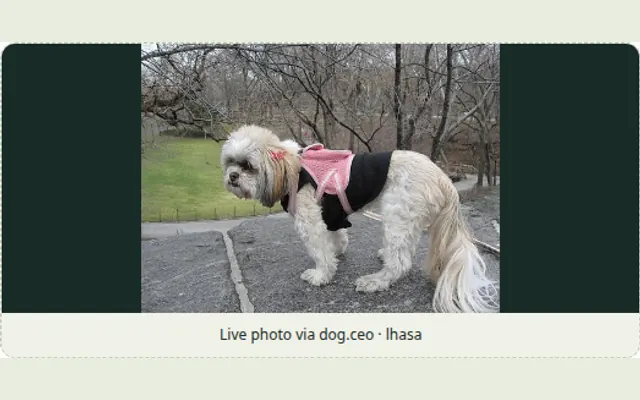
Dog photo of a Lhasa in a pink harness, fetched live from dog.ceo and shown in the lesson result box.
Design decision, evidence and linksHide the evidence

Hands-on lessons on how AI tools work. Fetch a dog photo with a real request, or find your place on Vector Planet. No account or key. The Dog lesson has a teacher guide and worksheet.

Dog API lesson: the photo returned by the live dog.ceo request.

Supporting and archived

More research

Agent security, the SEED measurement protocol, a pull-request study and The Bus.

Limit Whether SEED improves outcomes remains a research question. The Bus premise was retired.

Design decision, evidence and linksHide the evidence

Agent security: how people approve agent actions and review them later. Throughput is not progress: an author-run study of 1,979 pull-request commits in one repository, using the SEED codebook. Research-sprawl plan: how I keep project copies and corrections findable.

SEED: a measurement protocol and checking tools for agent-driven work. Whether it improves outcomes remains a research question.

The Bus: a coordination exploration with its design history preserved. The premise was retired.

File details on this page

Format, size and a short SHA-256 identifier, measured when this page was built.