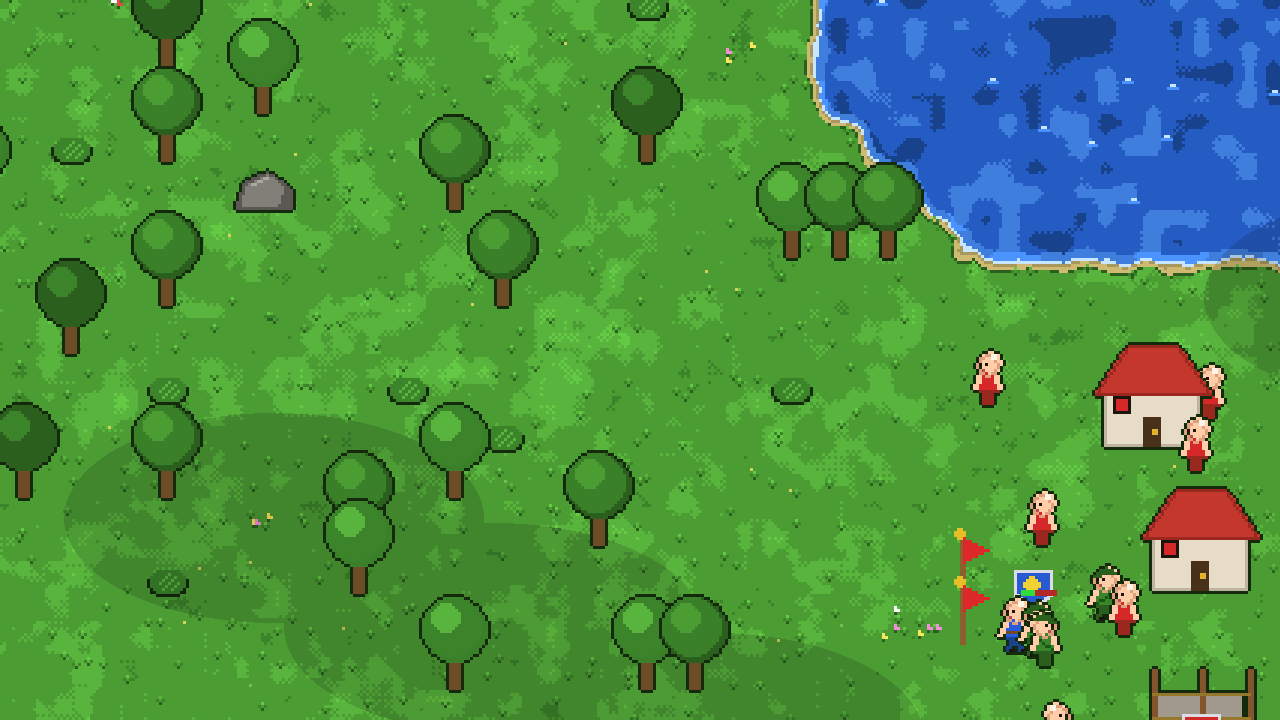
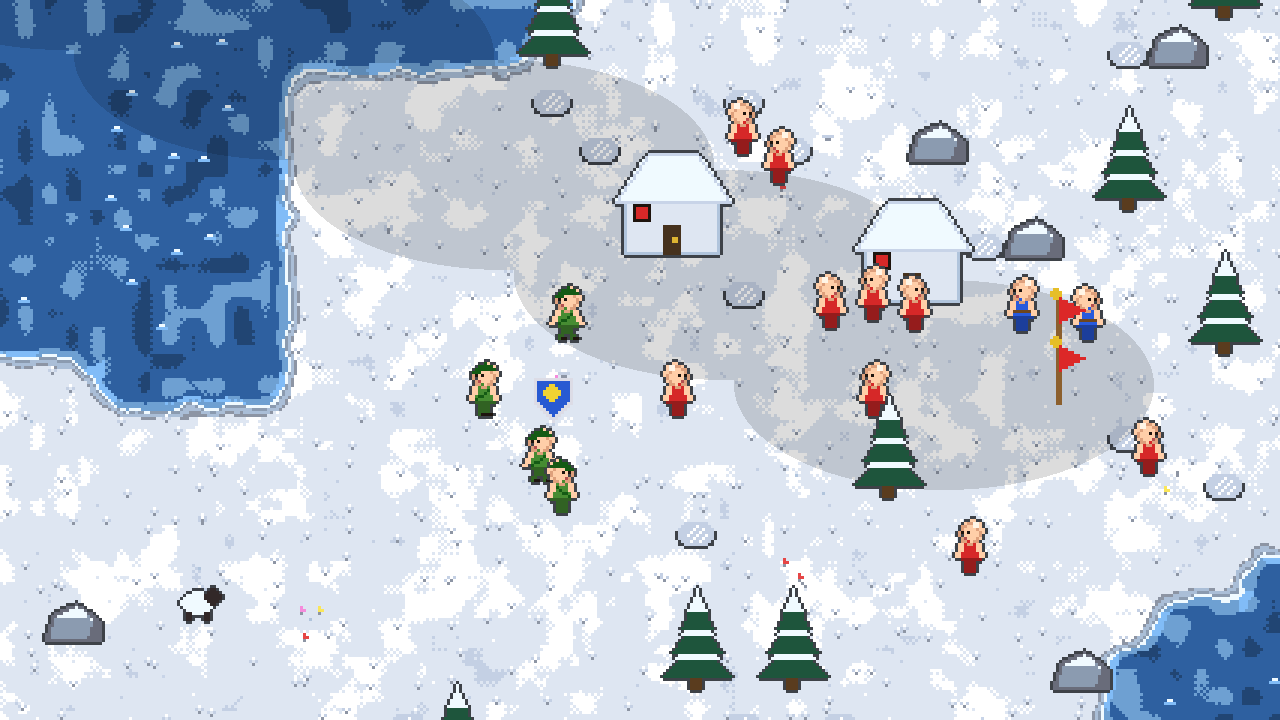
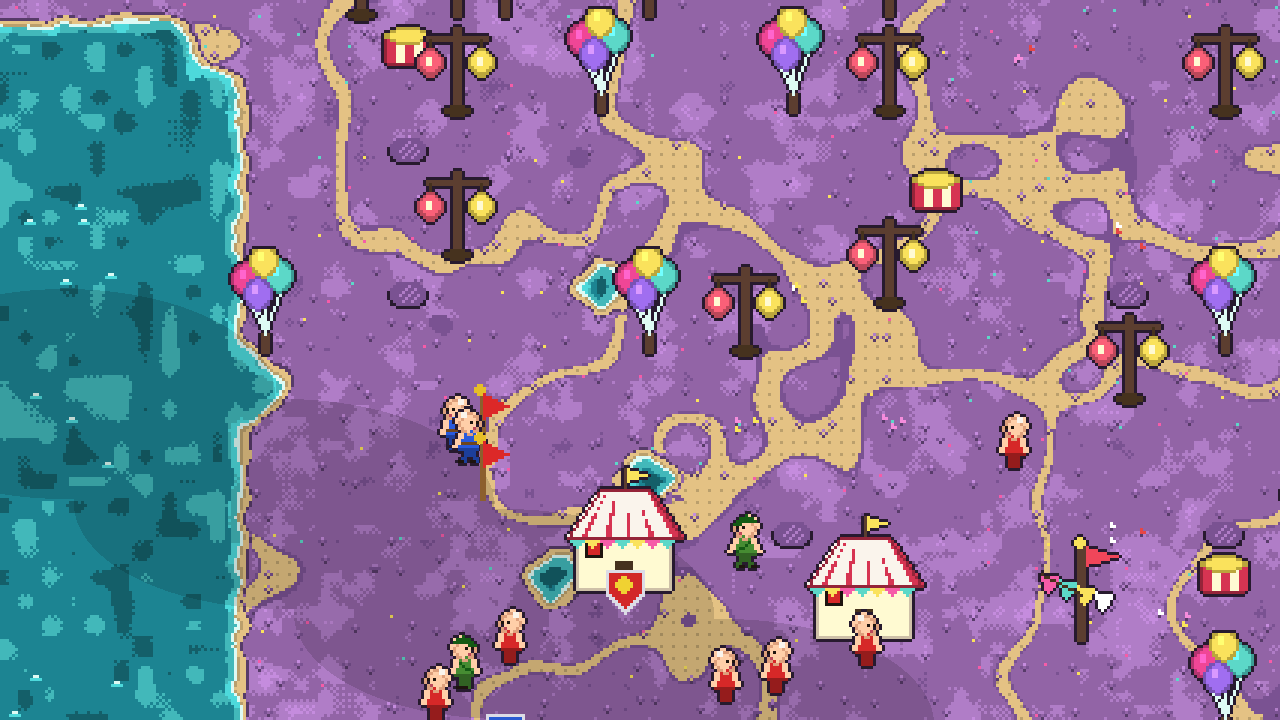
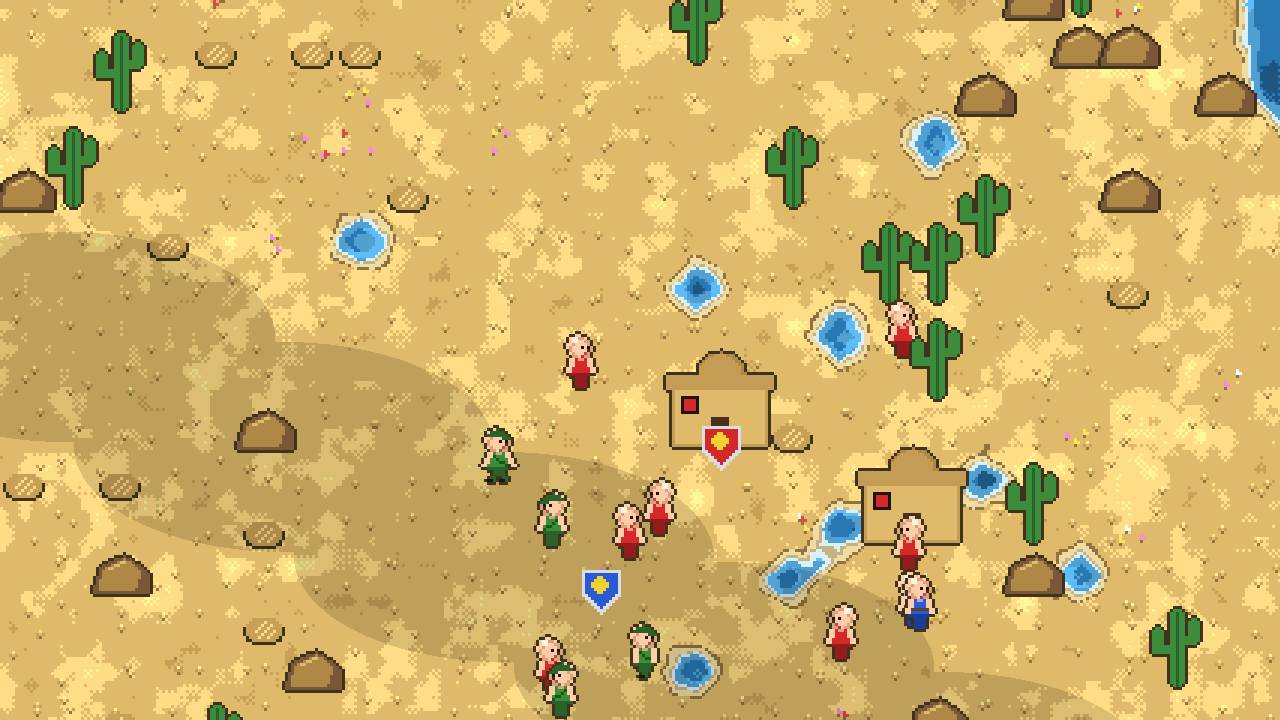
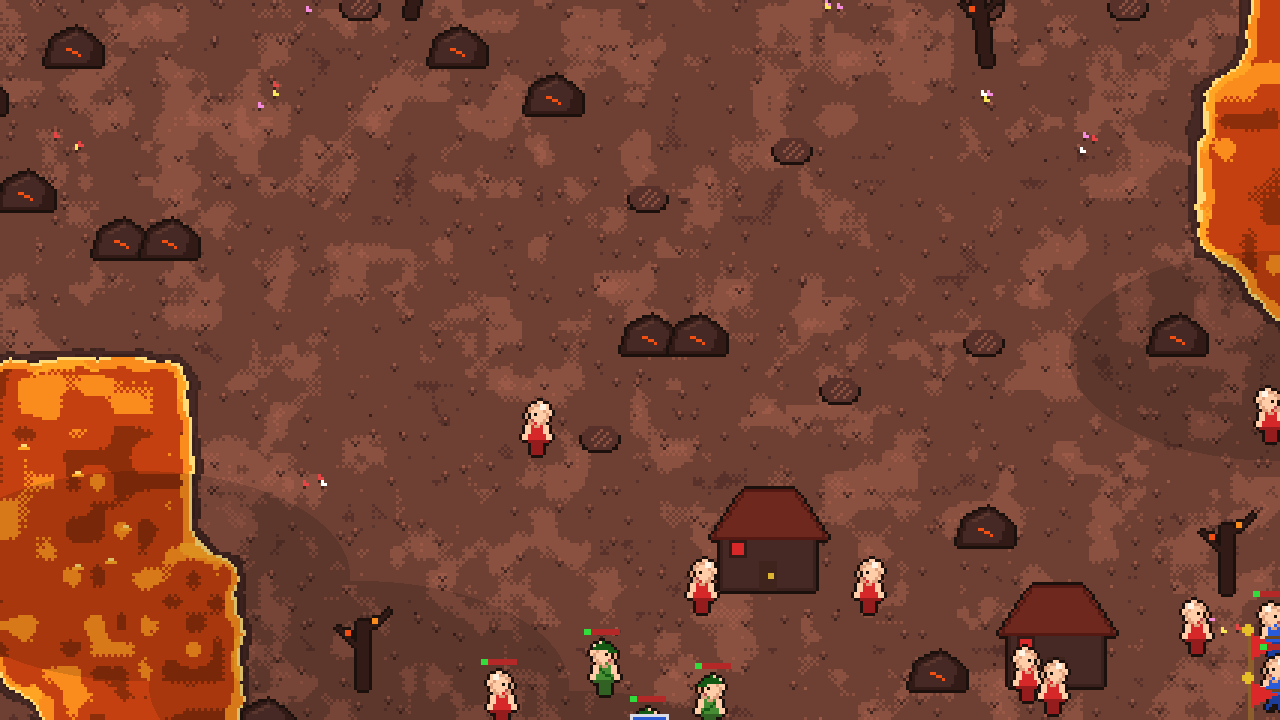
Workers breed inside houses. Pick a Baldie up with the Hand, drop it into a house and the count climbs.
Keyboard: Tab or F6 leaves the game.
Project-made art. The screen shows stills from the procedural edition until the game runs; the game uses generated levels and art made for this project.
Baldies is a god game from 1995 by Creative Edge Software, first on the Atari Jaguar CD and then on PC in 1996. You breed a tribe of bald workers, put them to work as builders, soldiers and scientists, research inventions and outwit the Hairies. My remake had no source code to start from: one earlier prototype worked from public specifications, and the other decoded the level files and used a disassembler and source-linked Consumption Engine context to read data tables. The original isn't sold on GOG or Steam today. By , 341 people had asked GOG for it.
About 14 MB. Measured October 14, 2026; on a laptop or desktop it starts loading as soon as you arrive and takes the screen when it is ready, unless your browser asks to save data. Sound is off in the game on this page.
Your browser asks to save data, so the game waits until you press Run the game; Wi-Fi recommended.
The Windows desktop remake implements the Hand, four jobs, building, the Shovel, Wings, inventions, the Hairy opponents, saving anywhere, and an attract mode. The browser edition on simoneresearch.com runs the same Python simulation as the desktop remake, on generated levels with project-made art, plus the live rules controls. The desktop build can load the original levels (20 per world). The rules are the remake's own tuning.
What the original files revealed
The whole world is drawn from 1,280 tiles of 16 by 16 pixels. Trees, rocks and houses are painted into the tiles, not placed on top of them.
A level file is a grid of tile numbers plus who starts where and what may be researched. Everything that made those grids play, the breeding, the jobs, the fights, lived only inside the program.
There are 31 inventions. Each level carries its own settings for the Hairy AI.
The original simulation ran at ten steps a second. The remake runs at twenty.
In the remake, a house holds 10 Baldies and grows to 20, 30, 40 and 50.
How I rebuilt it with AI agents
I directed AI coding agents across two prototypes and combined them into this remake. One prototype was written from public specifications without decompiling the executable; the other decoded the level files and used a disassembler with Consumption Engine context to read data tables such as house capacities. The earliest preserved file is dated October 7, 2026, two playable prototypes were reviewed October 8, and the combined remake completed at commit c37f1b5 on October 9 (calendar time). The desktop build passes 334 automated tests and reads the original levels from a copy you own. The browser edition contains no original game files.
Why it matters
Baldies was made by Creative Edge Software in 1995. I rebuilt it without access to its original source code. The remake's rules now exist as code that can be read, tested and changed, and the sliders below do that while the game runs. The broader question is whether the same approach can help recover file formats and data from other old programs, and connect them with new ones.
Change the rules of the remake while it runs
This is the remake's own engine, running its procedural edition in your browser. Like an arcade cabinet, it starts in attract mode, cycling through its five worlds by itself; take over whenever you like. The sliders change the game's rules while it runs, and Reset puts each one back to the remake's default.
The live game and these rule controls need a computer with a mouse. On this device, the stills above remain available.
The simulation step: ten per second in the original, twenty in the remake
the fixed-tick game loop
What I plan to test next
Next I plan to test this two-prototype method on three game designs: a colony simulator, a creature-breeding roguelike and an open-world role-playing game. These are planned explorations, not completed builds.
Baldies was made by Creative Edge Software of Edinburgh, founded by David Wightman, who was its lead designer and programmer; the art was by Alan Duncan, David Brown and Paul Docherty. It began in 1993 as an Amiga game and shipped first on the Atari Jaguar CD in December 1995, published by Atari Corporation, then on PC in November 1996 from Panasonic Interactive Media, with later PC, Saturn, PlayStation and Macintosh releases in Europe and Japan (as Baldy Land) between 1998 and 2003. Its US trademark registration was cancelled in 2006. Media notice. If the rights holders ever re-release Baldies, I'd welcome it and step aside.
Also on this site
Lessons, the research project and the latest findings
Free lessons
12 course modules and 11 workshops on how AI tools work
Fetch a dog photo with a real request. Decide whether to bring an umbrella from live weather data. Give two search strategies equal work and compare their moves. Each lesson has something to change and a result to explain. No account, API key or coding experience needed.
Teaching a class? The Dog API lesson plan has a printable worksheet and an answer discussion.
Main research project
Simone Consumption Engine
The same idea, applied to knowledge. When a source changes, yesterday's answer may need to change too. The project connects sources, evidence and checked work so people and AI agents can revisit what they know.
A public synthetic Python fixture you can run carries a retry policy from three to two, refuses the earlier snapshot and keeps the history. In the Baldies remake, one prototype was written from public specifications without decompiling the executable; the other decoded the level files and used a disassembler with Consumption Engine context to read data tables such as house capacities.
Latest research /
Teaching an AI agent a project's rules.
Given only the task, agents passed 0 of 38 house-rule checks on a synthetic project; with source-linked library tools they passed 34 to 38 of 38. On 37 real-repository tasks (222 builds), a compiled guide (48.8%) and library tools (49.0%) did not beat the ordinary workflow (53.8%).
I choose the research questions, design the systems and verify the results, directing AI coding agents for implementation, testing and drafting. The earliest preserved file of the Baldies remake is dated October 7, 2026; the combined remake was completed on October 9 (calendar time, not hours worked). For press, technical roles, or questions about the work, reach me directly.